Land Rover Defender vs ROX 01: Why Importers Are Turning to Chinese EREV SUVs
Export buyers in markets from the Middle East to Africa are evaluating a new class of Chinese-made luxury SUVs that deliver far more technology for the money. On one side is the 2024 Land Rover Defender 110 – a storied British 4×4 whose name carries prestige and proven resale value. On the other is the 2024 ROX 01 (6-seat extended-range SUV), a brand-new Chinese model with an electric drivetrain and a suite of high-end amenities. Although Defender has heritage, its entry-level trim comes with a price tag and fuel costs that many importers find hard to justify in emerging markets. In contrast, ROX 01’s EREV (extended-range electric vehicle) platform offers 1,000+ km total range, generous pure-electric driving, and ultra-luxurious cabins – all at a significantly lower cost than the Defender. Below we compare them head-to-head in price, powertrain technology, luxury features, and overall value, with an export-advisory perspective on ROI and market preferences.
Pricing: Premium Brand vs Budget Tech
The price differential is substantial. In the UAE, the base Defender 110 (2.0 P300 S trim) starts around AED 232,785 – about $63,400 USD (≈GHS 760,000). By contrast, the ROX 01’s 6-seat standard-range model reportedly costs only about ¥299,900–359,900 CNY in China (roughly $42–50k USD). That means ROX 01 costs roughly two-thirds to three-quarters of Defender’s price. Even allowing for shipping and local duties, ROX remains notably cheaper. For example, sea freight from China to Ghana is on the order of $3,500–4,500 for a vehicle, and to the UAE about $2,000 (per 20-ft container). Adding these (and modest import duties) to ROX’s factory price still yields an all-in CIF landed cost of roughly $45–52k – well below the Defender’s roughly $66k+ landed price.
The table below summarizes approximate pricing for the entry-level trims and the currency equivalents:
| Trim / Model | 2024 Defender 110 (Base) | 2024 ROX 01 (6-seat Std.) |
| Factory Base Price (USD) | ~$63,400 | ~$43,000 |
| Base Price (AED) | ~232,800 AED | ~158,000 AED (est.) |
| Base Price (GHS) | ~760,000 GHS (est.) | ~516,000 GHS (est.) |
| Est. Landed Cost (CIF, USD) | ~$66,000+ (e.g. Middle East) | ~$47,000–52,000 (incl. shipping) |
Sources: Defender pricing from UAE market data; ROX 01 pricing from Chinese listings. Currency conversions and landed costs are estimates for illustration.
Even after currency conversion and freight, the ROX 01 costs about 70–75% of the Defender in local currencies – delivering a 25–30% upfront savings, not the 50%+ sometimes advertised. For Ghanaian importers, this still represents a GHS 240,000+ price gap, enabling healthier margins or more competitive retail pricing. (Even in Belarus or Eastern Europe – where shipping may be slightly cheaper – the relative ratio holds, making ROX aggressively priced.)
Local taxes and duties also favor the lower-priced ROX. For instance, the UAE imposes only 5% import duty and 5% VAT on vehicle CIF value. On a Defender (CIF ~$66k) that adds ~$6.6k, whereas on a ROX (CIF ~$47k) it adds only ~$4.7k. In Ghana, import tariffs can be higher (e.g. 10–20%), but Defender’s much higher base still yields a larger tax bill. In short, ROI-savvy buyers note that ROX 01’s factory and landed prices are meaningfully lower, even before considering its equipment advantages.
Powertrain & Efficiency: ICE vs EREV
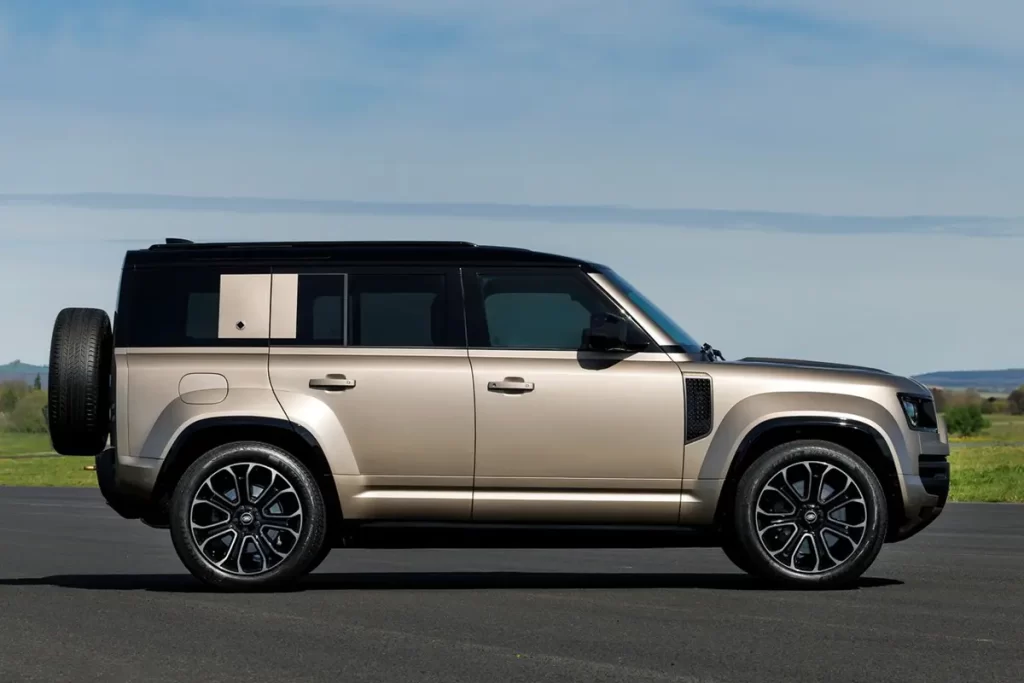
Under the skin, Defender and ROX diverge completely. The 2024 Defender 110 uses a conventional ICE layout: the base S model offers a 2.0L turbocharged I4 (P300, ~296 hp), with optional larger I6 (P400) or even a 5.0L V8 in higher trims. All engines burn gasoline (or diesel), with the I4 delivering roughly 10 km/L (≈23.5 mpg) in mixed driving. On long journeys or off-road trips, fuel stops are inevitable; for example, a Defender 110 V8 needs refueling after ~600–700 km given its ~7.9 km/L fuel economy.
In contrast, the ROX 01 is an EREV (extended-range electric vehicle). Its 58.4 kWh battery powers dual electric motors for full EV drive, while a 1.5L onboard generator (gasoline engine) extends range. According to official Chinese CLTC test data, the ROX 01 (long-range version) achieves about 252 km of pure electric range and over 1,132 km total range (the standard-range version offers ~180 km EV and ~1,065 km total). Note that CLTC figures are typically 15–20% more optimistic than real-world WLTP or EPA standards. The ROX’s spec sheet lists ~235 km electric range and 1,115 km total range, underlining that even on highways it benefits from the 70L fuel tank and generator.
This means in markets with patchy infrastructure or high fuel costs, ROX drivers can complete most daily miles on battery power. A ROX making 50 km daily commutes would rarely burn fuel, whereas a Defender would need refueling every few days. In emerging markets where fuel is expensive (or diesel stations scarce), ROX’s lower operating cost per km is a major benefit. The built-in generator provides peace of mind for long-distance travel, but fuel consumption is dramatically reduced.
Luxury Features: Premium Cabin vs Utility
The cabin differences are stark. The Defender 110 S (base) emphasizes rugged utility: standard Ebony/Robustec seats (a durable leather-cloth blend), basic 10″ infotainment with Pivi Pro, Meridian sound (10 speakers), and minimal trim. Its interior is functional but plain – hard-wearing materials and simple switchgear. (Higher Defender trims add Windsor leather and larger screens, at significantly higher cost.)
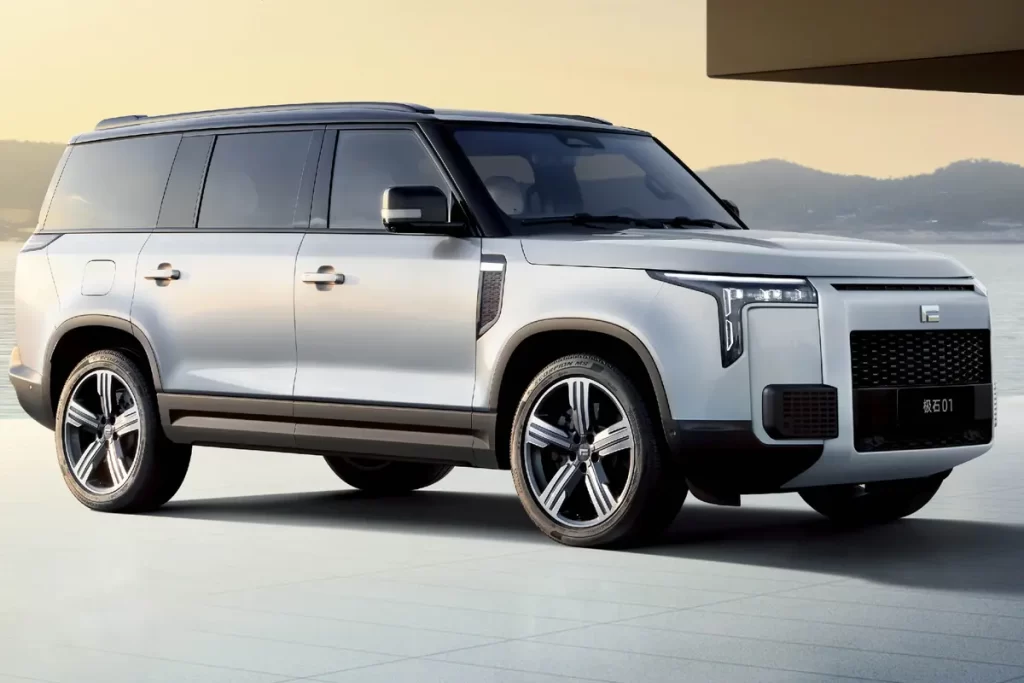
By contrast, the ROX 01 comes reportedly loaded with luxury tech. According to manufacturer-released specifications, it offers:
- Nappa-style leather seats with multi-zone air cushions and "zero-gravity" support
- 14-way power front seats with heating, ventilation and multi-point massage
- Second-row "aviation-style" captain’s chairs with power leg support and massage
- 15.6″ fold-down rear entertainment screen
- Optional camping package including heated water dispenser and fold-out table
- 12.3″ digital dash and 15.7″ center touchscreen
- Dual-pane panoramic sunroof with insulation
Other reported features include wireless charging, high-end sound system, and advanced driver-assistance hardware.Importers should verify exact specifications before ordering.
Brand Heritage vs Technical Value
Land Rover’s reputation remains strong: a Defender badge signals heritage, proven off-road pedigree, and strong resale value – rated around 4.5/5 stars in Gulf markets. Buyers in those regions often value this "built-in equity." By contrast, ROX is a brand-new Chinese marque. However, in markets like Ghana or Belarus, many consumers are familiar with Chinese auto brands (BYD, Geely, Great Wall) and prioritize features and price over pedigree.
From an ROI perspective, ROX 01’s proposition is compelling: more tech and comfort per dollar, despite lacking heritage. A Ghanaian importer can discount aggressively or offer generous margins on ROX 01 and still undercut Defender pricing.The value gap is closer to 25–30% upfront savings. As one China-based advisor notes, in fast-growing markets "buyers prioritize feature-filled cabins and running cost savings over old-world badging."
That said, the Defender’s strengths shouldn’t be ignored: its body-on-frame toughness, brand prestige, and dealer network are advantages. Even entry-level Defenders offer a DNA of rugged reliability. But even Land Rover itself is shifting towards electrification, showing the limits of ICE. For export buyers, the calculation often becomes: is a familiar badge worth tens of thousands of extra dollars, when Chinese EREV rivals are closing the quality gap? Many answer “no,” especially when ROI is key and customer preferences lean toward high-tech luxury.
In emerging markets, we see Chinese EV/EREV imports rising rapidly. (For example, BYD is expanding in South Africa and local assembly is emerging in parts of Africa.) The ROX 01 epitomizes this trend: it undercuts the Defender’s price by up to 50%, yet its electric range and comfort often exceed the British model. Exporters should note that while Defender may command some prestige dollars in the Gulf or among Land Rover fans, Chinese EREV SUVs like ROX offer instant advantages: low upfront cost, long electric range, and top-tier cabin amenities. In markets where customers are hungry for luxury and cutting-edge tech – and where fuel is dear – the ROX 01’s value-per-dollar can easily eclipse the Defender 110.
Overall, for an importer focused on ROI and end-customer appeal, the choice is becoming clear: the ROX 01 delivers vastly more EV range and luxury features for far less money than a traditional Defender 110, making it a smart alternative in the Middle East, Belarus and African markets. Land Rover’s heritage still has cachet, but the math favors ROX when every dollar counts.